
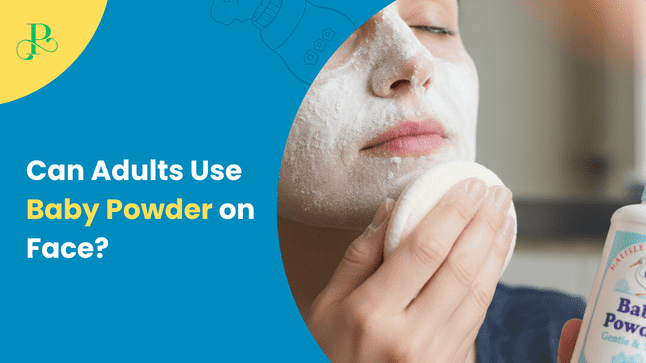
Yes, Adults can use baby powder on their Face, as it may be harmful if not used correctly. However, experts generally advise against it for daily use. Baby powder is not formulated for the nuanced needs of adult facial skin.
On oily and shiny skin, baby powder can be applied to the face. It is efficient, particularly in wet conditions, to absorb oil and make the surface matte. Long-term usage is however a matter of safety concern. The reason is worry is that it may lead to breakouts or blocked pores. This is a concern that is brought up by skincare experts.
Understanding Baby Powder: Ingredients and Function
Before applying any product to your face, especially one not specifically designed for it, it’s essential to understand what it contains and why it was created. Before everything, checking the expiration of baby powder is also a very crucial thing.
Common Baby Powder Ingredients
Baby powders are fine-milled powders designed for moisture control. They typically fall into two main ingredient categories:
- Talc: The first and most classical ingredient is the talc, which is a naturally occurring mineral and is a mixture of magnesium, silicon, and oxygen. It is valued due to its capacity to trap moisture and decrease friction to produce a silky-smooth texture.
- Cornstarch: Another substitute, which is vegetable in nature, is cornstarch, which is made using corn kernels. It is commonly sold as a natural and talc-free product and can do the same things as far as moisture absorption is concerned.
It is imperative to mention that most of the powders with the talc content also have fragrances and other additives. All of which are developed to be applied on the body rather than on the delicate skin of the face.
Original Purpose of Baby Powder
The first, the intended aim of the baby powder is to fulfill the special needs of the infant’s skin in the diaper region. Its function is two-fold:
- Moisture Absorption: To absorb any excess moisture, which may cause irritation.
- Friction Reduction: To develop a skin shield that will protect against friction and diaper rash.
It is in these areas that it has been effective and hence has made the adults repurposed it as a shine controller. But in the case of the face, with its fine skin and its small follicular structure and closeness to the respiratory tract, the usage situation is entirely different.
Side Effects and Safety of Using Baby Powder on Adult Skin
There are significant concerns regarding the application of baby powder on the face. Such anxieties are not so much about its cosmetic effects. They are more concerned with its possible health effects. The effect is of great concern, especially on inhalation and prolonged exposure.
Inhalation Hazards: The Primary Safety Concern
Any fine, loose powder poses the greatest health risk of inhalation. Particles, particularly those in conventional baby powder, are very tiny and can be easily inhaled.
What is the effect of inhaling the powder? The American Academy of Pediatrics recommends not using talcum powder on infants, in particular because of the risk of developing respiratory distress. In adults, a condition referred to as pulmonary talcosis is caused by chronic or heavy inhalation of talc-based powders. This is a serious form of lung inflammation and scarring, which may be caused by the failure of the lungs to remove the foreign body.
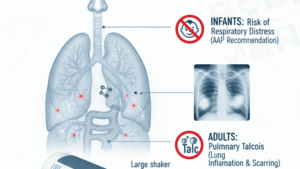
An example of this is Health Canada, which advises consumers not to inhale loose talc powder and states that it may cause damage to the lungs. This danger exists in any loose powder, but because the distribution of baby powder (Frequently a large shaker opening) may be more likely to cause accidental inhalation than with a cosmetic powder applied on the face. On the one hand, can I safely breathe in the fumes of baby powder in case I use it on my face? It is a popular question; the reply given by the health authorities is always no. You must do your best to avoid a great deal of inhalation of any loose powder.
Potential Skin Issues
Although talc and cornstarch are usually considered to be safe when applied to the skin surface. There are certain risks involved in applying them to the face, depending on the type of skin:
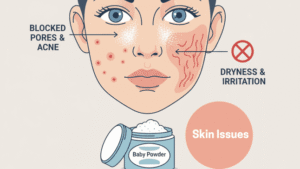
- Blocked Pores and Acne: The Baby powder is made to absorb oil and moisture. When these elements mix with the natural sebum of your skin, the dead skin cells, and any remaining residue of makeup, there is the possibility that they will settle into and block pores. In individuals who have acne-prone skin, it may cause new acne and aggravate their current state.
- Drying or Irritation: A lot of powders are non-comedogenic. Nevertheless, the extremely absorbing property of baby powder may be excessively drying to the adult skin. This is especially so in people with dry or mature skin types. Scented varieties of fragrances are another usual irritant. They are capable of producing sensitivity, redness, and inflammation.
The Talc-Cancer Controversy (Brief Mention)
Does putting baby powder on your face cause you cancer? This is the gravest and most prevalent problem. The main cause of this controversy is that historically, the mining of talc occurred with deposits. That can be located close to asbestos and contaminated with it, which is a known human carcinogen.
While cosmetic-grade talc in the U.S. is legally required to be asbestos-free and major cosmetic manufacturers have rigorous testing standards, the initial concern has led to ongoing consumer anxiety. It is important to know that the primary studies suggesting a link between talc and cancer focus overwhelmingly on the long-term, direct application of talc powder to the genital (perineal) area, which allows particles to potentially travel to the ovaries.
As an expert from the MD Anderson Cancer Center noted, “The skin of the face is very different from the perineal area… No evidence using facial cosmetics products containing pure, uncontaminated talc causes cancer.” However, due to the lingering concern, many major brands have now moved entirely to talc-free formulations for baby products.
Benefits of Using Baby Powder as a Facial Product For Adults
Despite the safety warnings, adults continue to use baby powder on their faces. This is because of its practical benefits and accessible cost.
Shine Control and Oil Absorption
The primary reason for its popularity in the beauty community is its powerful ability to absorb oil. Temporarily, it can be extremely effective:
- Mattifying Effect: Talc and cornstarch are particularly good at pulling off the surplus sebum, which gives an instant, matte finish, especially in the T-zone (forehead, nose, and chin), which is oily and provides an instant de-oiling effect.
- Emergency Fix: For those with extremely oily skin, a light dusting can quickly cut through shine, acting as a convenient “What can I use instead of setting powder?” when professional makeup is not available.
Setting Makeup and Primer Replacement
Many people utilize baby powder as a substitute for professional setting powders.
- Setting Foundation: When applied after liquid or cream foundation, it can set the base, providing a barrier that helps prolong the makeup’s wear.
- Volumizing Lashes: A thin coat dusted onto lashes between coats of mascara can provide a temporary thickening effect, mimicking the benefits of a lash primer.
Emergency Dry Shampoo for Bangs
Though not a direct facial application, many users rely on a small amount of powder. This is applied to the hairline (especially bangs) and blended thoroughly. This is to soak up oil and refresh hair between washes.
Safer Alternatives to Baby Powder for Facial Use
Given the genuine health and skin risks associated with loose powders—especially talc-based ones—dermatologists and cosmetic formulators overwhelmingly recommend using products specifically designed for the face.
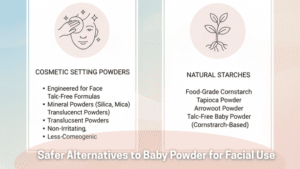
Mineral and Translucent Setting Powders
These are the most effective and safest alternatives, as they are engineered specifically for cosmetic use.
- Cosmetic-Grade Ingredients: These products utilize finely milled ingredients like silica, mica, rice powder, and cosmetic-grade starch, which are formulated to be less irritating, less likely to clog pores, and are often specifically tested to be non-comedogenic.
- Safety of Cornstarch-Based Powders: If you prefer a starch-based powder, look for talc-free baby powders that primarily use cornstarch, tapioca starch, or arrowroot powder. While these eliminate the talc/asbestos concern, the inhalation warning for any loose, fine powder remains, as highlighted by health organizations.
Oil-Blotting Sheets and Sprays
For controlling shine without adding a powder layer, these are excellent non-powder alternatives:
- Blotting Sheets: Absorb excess oil without disturbing makeup or introducing new particles into pores.
- Setting Sprays: Lock makeup in place and often contain mattifying or hydrating agents tailored to specific skin needs, making them a preferred professional choice.
Best Practices for Using Baby Powder (If Choosing to Proceed)
If, after understanding the risks and alternatives, you still choose to use baby powder on your face, here are the best practices to minimize harm. These are based on the principle of minimal exposure:
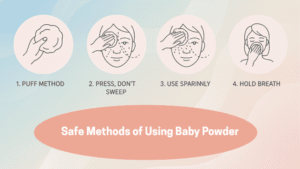
Applying with Caution: The Powder Puff Method
The goal is to eliminate the airborne cloud of powder.
- Use a Puff or Sponge: Never shake the powder directly onto your face or brush. Pour a very small amount onto a powder puff or makeup sponge.
- Press, Don’t Sweep: Gently press the powder onto the oily areas (the T-zone). This minimizes dust cloud creation and packs the product more effectively.
- Hold Your Breath: Briefly hold your breath during application to prevent accidental inhalation of any airborne particles.
- Use Sparingly: Apply only a minimal amount, enough to absorb oil, then dust away the excess with a clean, large brush, holding it away from your face.
Patch Testing Before Full Application
Always perform a patch test on a small, inconspicuous area. This could be behind the ear or on the side of the jaw. Do this for 24 hours. This is to check for any immediate irritation, redness, or allergic reaction. Do this before applying it to your entire face.
Final Advice: Should Adults Use Baby Powder on Their Face?
In the end, adults should avoid using baby powder on their faces. That’s what dermatologists and toxicologists say. Especially the ones with talc, and especially for daily use and overnight use. It’s a great oil absorber and cheap. But the risks of inhalation and clogged pores outweigh the temporary benefits.
Modern, cosmetic-grade setting powders are formulated to control shine, blend seamlessly, and help extend the wear of makeup. They do that without the health risks. The risks arise from using a product intended for the body that is formulated for a different purpose.
For healthy skin for life, always choose products for the face. And consult a dermatologist if you have persistent oiliness or acne.
FAQs
Is it safe to use baby powder on my face every day?
No, daily use is not recommended. Because there is an Inhalation risk, and it may clog pores and cause breakouts.
Can adults use baby powder on their face overnight?
No, don’t use baby powder on your face overnight. It will clog your pores and cause pimples. You’ll also breathe it in while you sleep, which isn’t healthy. For oily skin, it’s much safer to use a real face powder made for makeup.
Will baby powder clog my pores and cause acne?
Yes, it can. The finely milled particles, when mixed with sebum and dead skin cells, can easily settle into pores and contribute to the formation of acne.
Is there a difference between talc-based and cornstarch-based baby powder?
Yes. Talc is a mineral with historical concerns about asbestos contamination and is generally discouraged. Cornstarch is a natural, vegetable-based alternative. However, both pose an inhalation risk.
Can I use baby powder to set my under-eye concealer?
Don’t use near the eyes and mouth. Because of the high risk of inhalation and too drying for under eye skin.
What is the best alternative to baby powder for setting makeup?
Cosmetic-grade, translucent setting powders are the safest and most effective alternatives. These powders are formulated with ingredients like silica or specialized starches.
What should I do if I accidentally inhale baby powder?
If you breathe in a little, you’ll be fine. But if you cough, can’t breathe or have respiratory discomfort, go see a doctor immediately.