
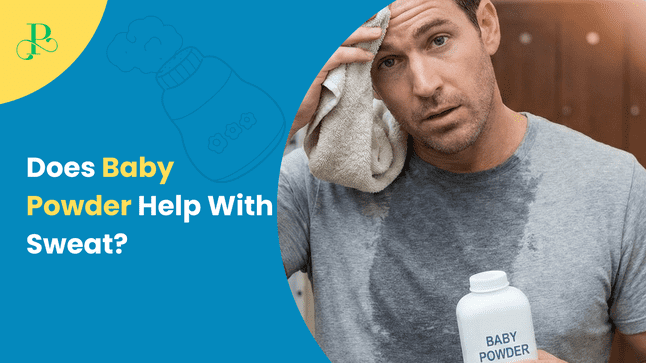
Yes, baby powder helps manage sweat by absorbing excess moisture to reduce friction-based rashes and minimize odors. However, it does not stop sweat production. Experts recommend using only talc-free, cornstarch-based formulas for safety.
Sweating is natural, but managing the moisture, odor, and potential rashes that come with it is a daily battle for many parents and active adults. A common household staple often pulled from the shelf for this purpose is baby powder. But does baby powder help with sweat effectively, and more importantly, is it safe?
While baby powder has been a go-to remedy for generations, modern pediatric guidelines and dermatological research have shifted the conversation. This guide explores the effectiveness of baby powder for sweat absorption, odor control, and rash prevention, providing you with the expert-backed answers you need for your family’s wellness.
How Does Baby Powder Help With Sweat?
To understand if baby powder works, we must look at its ingredients. Traditionally, baby powder is made from talc (a clay mineral) or cornstarch. The primary function of these powders is absorption, not antiperspirant action.
Unlike aluminum-based antiperspirants, which plug sweat ducts to stop moisture production, baby powder sits on the surface of the skin. It acts as a desiccant, soaking up existing moisture and reducing friction.
The Mechanism of Action
- Surface Area: The fine particles increase the surface area available to trap water molecules.
- Friction Reduction: By creating a silky layer between skin folds (like armpits, groin, or neck), powder prevents the skin-on-skin rubbing that exacerbates sweating and irritation.
- Cooling Effect: The application often provides a temporary cooling sensation, which can psychologically and physically feel fresher.
The American Academy of Pediatrics (AAP) generally recommends against using talc-based powders due to inhalation risks and potential asbestos contamination in non-purified talc. As noted by Dr. Jennifer Shu, FAAP: “If you do use baby powder, choose a cornstarch-based one, and keep it away from the baby’s face to avoid inhalation.”
For this reason, when we discuss “baby powder” in this article, we are explicitly recommending cornstarch-based alternatives or talc-free formulas for safety.
Does Baby Powder Help With Sweat Rash?
Yes, it helps prevent heat rash and chafing by keeping skin folds dry and reducing friction. However, avoid applying it to existing, oozing rashes as it can cake and worsen infection. Before applying anything to irritated skin, make sure to check does baby powder expire to ensure you aren’t using a product that could make the rash worse.
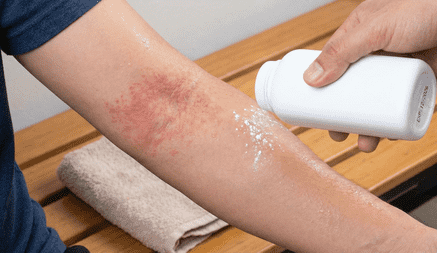
Heat rash (miliaria) and Intertrigo (friction rash) are common enemies of both babies in diapers and adults in gym clothes. Sweat rash occurs when sweat ducts become blocked and perspiration gets trapped under the skin.
Baby powder can be effective as a preventative measure rather than a cure. By keeping the skin dry, powder reduces the likelihood of friction—a key trigger for rashes.
- For Babies: Keeping the diaper area dry is crucial. Cornstarch powder can absorb excess urine and sweat, reducing the “wetness” that leads to diaper rash.
- For Adults: Applying powder to inner thighs or under breasts before a workout creates a glide barrier.
However, you should exercise caution when applying powder to an existing wet rash.
“Pastes and powders can cake up and actually block the pores further if applied too heavily on a sweaty rash,” warns Dr. Adnan Mir, a pediatric dermatologist.
If a sweat rash is already present and weeping (oozing), applying powder may create a gritty paste that harbors bacteria and yeast (Candida). In these cases, zinc oxide barrier creams are superior to powder.
Does Baby Powder Help With Sweat Smell?
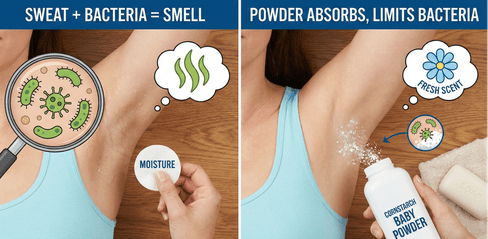
Body odor isn’t caused by sweat itself, which is odorless. The smell comes from bacteria on your skin breaking down the proteins in your sweat into acids.
Managing Moisture Limit Bacteria
Does baby powder help with sweat smell? Indirectly, yes. Bacteria thrive in moist environments. By soaking up the sweat, baby powder removes the breeding ground for bacteria.
Masking vs. Eliminating
Most baby powders contain mild fragrances (like the classic “clean” baby scent). This helps mask minor body odors. However, powder does not kill bacteria. If you have strong body odor (bromhidrosis), baby powder alone will likely be insufficient.
For better odor control, wash the area with antibacterial soap, dry thoroughly, and then apply a cornstarch-based powder to maintain dryness.
Does Baby Powder Help With Sweaty Face?
Yes, it effectively absorbs oil and reduces shine, but medical experts strongly advise against applying it to the face due to serious inhalation risks and the potential to clog pores. You can use baby powder on face but follow proper guide. If you are considering adding this to your beauty routine, you should read our guide on can adults use baby powder on face.
While the powder can temporarily mattify the skin, the fine particles are easily airborne and can be accidentally breathed into the lungs when applied near the nose and mouth. Additionally, when powder mixes with facial oils and sweat, it forms a paste that can block follicles, leading to acne breakouts and irritation rather than a clean, dry feeling.
The American Academy of Pediatrics (AAP) issues a strict warning regarding facial application: “Do not use baby powder on the face because the powder can be inhaled and hurt the lungs.”
Does Baby Powder Help With Sweaty Feet?
Yes, it is highly effective for absorbing moisture inside socks to prevent athlete’s foot and blisters. Dusting dry feet before putting on socks creates a barrier against dampness.
Hyperhidrosis (excessive sweating) often targets the feet, leading to athlete’s foot and foul odors. Feet contain more sweat glands per inch than any other part of the body.
Baby powder is highly effective for sweaty feet because the environment is enclosed.
- Direct Application: Dusting powder directly onto dry feet before putting on socks absorbs moisture instantly.
- Friction Barrier: It prevents blisters caused by wet socks rubbing against heels.
According to the Mayo Clinic, keeping feet dry is the first line of defense against fungal infections. They suggest using foot powders (which are often medicated cornstarch) to help absorb sweat. If you don’t have medicated powder, standard cornstarch baby powder is a viable household substitute.
Does Baby Powder Help With Sweaty Armpits?
It can absorb mild dampness and soothe irritation, but it may clump into a paste during heavy sweating. It works best as a “top-up” for dryness rather than a full replacement for antiperspirants.
Many adults look for aluminum-free alternatives to deodorant. Baby powder is a frequent candidate for underarm care.
Expectations vs. Reality
- Will it stop wetness? Only partially. It will absorb mild perspiration, but on a hot day or during intense exercise, the powder will likely wash away or turn into a paste.
- Will it stop odor? It provides a temporary freshness but lacks the antimicrobial agents found in deodorants.
The “Paste” Problem
One downside to using baby powder on armpits is clumping. When mixed with heavy armpit sweat, the powder can roll up into small white balls, which can be uncomfortable and visible.
For armpits, baby powder works best as a “top-up” after applying a natural deodorant, or for days with low physical activity.
Does Baby Powder Help With Sweat Stains?
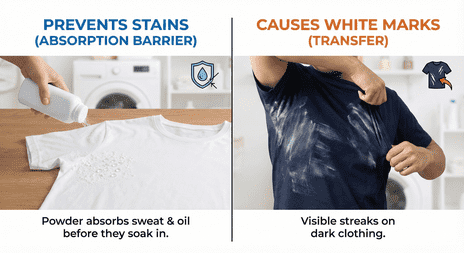
It helps prevent stains, but cannot remove existing ones. Baby powder acts as a barrier that absorbs sweat and oils before they soak into your clothes.
Yellow sweat stains on white shirts are caused by the reaction between sweat, bacteria, and the aluminum found in antiperspirants. Since baby powder is aluminum-free, it does not cause yellowing. However, baby powder can create white transfer marks. If you apply powder and immediately pull on a dark shirt, you will likely see white streaks.
Technically, by absorbing sweat before it reaches the fabric, a heavy layer of powder might protect the shirt slightly. But the risk of white powder getting on the clothes usually outweighs the benefit. It is not an effective stain remover or stain preventer in the traditional sense.
Does Baby Powder Help With Sweat in Shoes?
Yes, sprinkling powder into shoes overnight is an excellent way to draw out residual moisture and neutralize bad odors. Just remember to shake out the excess powder before wearing them again.
This is one of the most effective uses for baby powder outside of diapering. Shoes are breeding grounds for fungi and bacteria due to the dark, damp environment.
Deodorizing Footwear
Sprinkling baby powder into shoes (and leaving it overnight) serves two purposes:
- Moisture Removal: It draws residual dampness out of the insoles.
- Odor Neutralization: It helps freshen the smell of the shoe.
Shake the excess powder out of the shoes before wearing them to avoid leaving white footprints on your floors or carpets.
Natural Alternatives to Baby Powder for Sweat Control
Given the safety concerns regarding talc and the risk of inhalation for infants, many parents and health-conscious adults prefer alternatives. If you want the drying benefits without the traditional baby powder risks, consider these options:
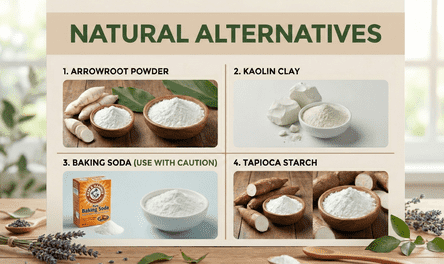
1. Arrowroot Powder
Arrowroot is a starch extracted from tropical tubers. It is lighter than cornstarch and incredibly absorbent. It is widely considered safe and is a common ingredient in “natural” dry shampoos and body powders.
2. Kaolin Clay
This soft white clay is gentle on sensitive skin. Unlike other clays that might be too drying, Kaolin absorbs sweat and oil without stripping the skin of natural moisture.
3. Baking Soda (Use with Caution)
Baking soda is excellent for odors, but its high pH can disrupt the skin’s acid mantle, leading to irritation. It is best used for shoes rather than direct skin application, especially on babies.
4. Tapioca Starch
Similar to cornstarch but derived from the cassava plant, tapioca starch is highly absorbent and has a smooth texture that reduces friction effectively.
The American Cancer Society notes that while the link between talc and cancer is still being studied, avoiding talc-based products eliminates the risk entirely. Cornstarch and arrowroot remain the safest recommendations for families.
Conclusion:
So, does baby powder help with sweat? Yes, but primarily by absorbing moisture, not by stopping its production.
For parents and adults navigating family wellness, the verdict is clear: safety must come first. Always choose talc-free, cornstarch-based powders to eliminate respiratory risks and potential asbestos contamination. When using the product, avoid shaking the bottle directly over a baby or yourself; instead, pour the powder onto your hand away from the face before gently applying it to the skin.
While baby powder excels at preventing friction rashes, keeping feet dry, and freshening shoes, it is important to remember its limitations, as it is not a complete cure for heavy sweating (hyperhidrosis) or severe body odor.
By understanding the proper use and limitations of baby powder, you can safely incorporate it into your hygiene routine to keep your family dry, comfortable, and rash-free.
Is it possible that some popular baby skin care products are doing more harm than good? With increasing reports of allergic reactions and skin sensitivities, should parents be more cautious about the ingredients they choose for their infants’ delicate skin? What natural alternatives can effectively replace these commercial products?
Yes, absolutely. Many commercial products contain harsh ingredients, so it pays to be cautious! As for natural alternatives to help with sweat, Cornstarch and Arrowroot powder are the best, safest replacements to keep skin dry.